
Your Microbiome: The Invisible Ecosystem Shaping Allergies
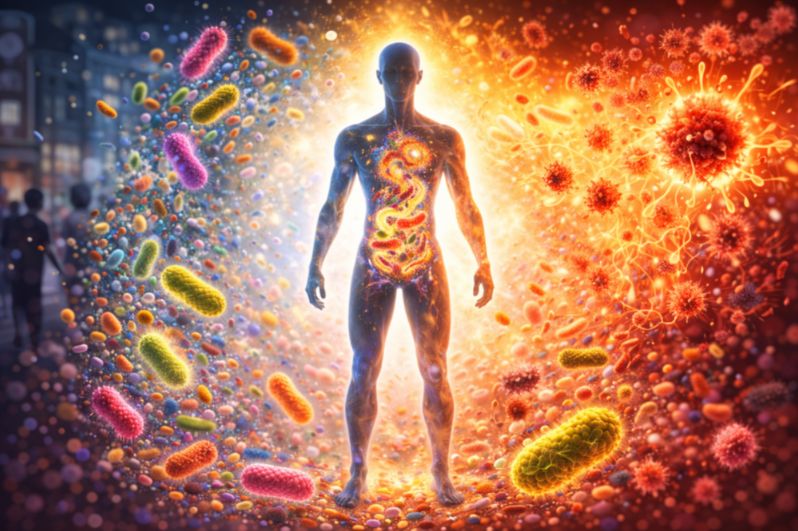
For decades, allergies were framed as simple cases of immune misfire, an overreaction to otherwise harmless substances like pollen, foods, or pet dander. But a growing body of research is reshaping that view. Scientists now believe that many allergic diseases may originate not just from the immune system itself, but from a hidden ecosystem that lives within us: the microbiome.
A Microbial Education System
From the moment of birth, the human immune system begins a lifelong process of education. Much of this instruction comes not from pathogens, but from beneficial microbes. These organisms help train immune cells to distinguish between genuine threats and harmless exposures, a process known as immune tolerance.
In a balanced microbiome, certain bacterial species produce metabolites such as short-chain fatty acids, which act as chemical signals that dampen inflammation and promote regulatory immune pathways. These signals encourage the expansion of regulatory T cells, which serve as the immune system’s braking mechanism, preventing excessive or misdirected responses.
When this microbial signaling is intact, the immune system learns restraint. When it is disrupted, restraint can be lost.
Modern Life and the Disappearing Microbiome
The rise in allergic diseases over the past half century has been striking, particularly in industrialized nations. This trend has prompted scientists to look beyond genetics and toward environmental change, especially those changes that affect microbial exposure.
Modern life has dramatically altered the way humans interact with microbes. Cesarean deliveries can bypass early exposure to maternal bacteria. Antibiotics, while lifesaving, can indiscriminately wipe out beneficial microbial communities. Diets low in fiber deprive gut bacteria of the nutrients they need to produce anti-inflammatory compounds. Urban living reduces contact with the diverse microbial ecosystems found in soil, plants, and animals.
The result is not simply a loss of microbes, but a loss of diversity, a narrowing of the microbial signals that help calibrate the immune system. This effect appears to be particularly consequential in early life. During infancy, the immune system is highly adaptable, and disruptions during this period may permanently alter how the body responds to environmental exposures.
When Microbial Balance Breaks Down
Across a range of allergic conditions, a common pattern emerges: dysbiosis, or an imbalance in microbial communities.
In food allergies, the gut microbiome appears to lose key bacterial groups that support tolerance to dietary proteins. Without these signals, the immune system may begin to treat food as a threat.
In asthma and allergic rhinitis, researchers have identified connections between gut microbial composition and airway inflammation, a phenomenon often referred to as the gut–lung axis. Early-life colonization with certain bacteria has been associated with increased asthma risk, while other microbial profiles appear protective.
On the skin, the story takes yet another form. In atopic dermatitis, reduced microbial diversity allows certain bacteria, such as Staphylococcus aureus, to dominate. These organisms can produce toxins that weaken the skin barrier and amplify inflammation, creating a cycle that perpetuates disease.
Though these conditions affect different organs, they may share a common origin: a disrupted dialogue between microbes and the immune system.
Toward a New Model of Allergy
This emerging understanding is beginning to shift how scientists think about allergic disease. Rather than viewing allergies solely as immune dysfunction, researchers are increasingly considering them as disorders of a broader ecological system, one that includes both human cells and microbial partners.
This perspective has important implications for treatment. Instead of focusing exclusively on suppressing symptoms, future strategies may aim to restore microbial balance.
Dietary interventions that increase fiber intake can enhance the production of beneficial microbial metabolites. Probiotics and prebiotics are being studied for their ability to support healthy microbial communities. And perhaps most intriguingly, early-life interventions, during pregnancy or infancy, may offer opportunities to prevent allergic disease before it begins.
At the same time, the field is moving toward greater precision. Because each person’s microbiome is unique, the most effective interventions may need to be tailored to the individual, guided by advances in microbiome sequencing and metabolomics.
Rethinking the Roots of Disease
The microbiome challenges a long standing assumption in medicine: that the body functions as a self contained unit. Instead, it suggests that human health depends on a dynamic partnership with trillions of microscopic organisms.
In the case of allergies, this partnership appears to be especially important. When microbial diversity is preserved, the immune system is more likely to remain balanced. When it is diminished, the system may drift toward hypersensitivity. The implications extend beyond allergy alone. They point toward a broader rethinking of chronic disease, one in which the boundaries between environment, microbes, and human biology are far more intertwined than previously imagined.
In this view, the question is no longer simply why the immune system overreacts. It is why the ecosystem that guides it has changed.
Reference
1. Koidl L, Untersmayr E. The clinical implications of the microbiome in the development of allergy diseases. Expert Rev Clin Immunol. 2021;17(2):115-126. doi:10.1080/1744666X.2021.1874353
2. Belkaid Y, Hand TW. Role of the microbiota in immunity and inflammation. Cell. 2014;157(1):121-141. doi:10.1016/j.cell.2014.03.011
3. Fujimura KE, Lynch SV. Microbiota in allergy and asthma and the emerging relationship with the gut microbiome. Cell Host Microbe. 2015;17(5):592-602. doi:10.1016/j.chom.2015.04.007
4. Arrieta MC, Stiemsma LT, Amenyogbe N, Brown EM, Finlay B. The intestinal microbiome in early life: health and disease. Front Immunol. 2014;5:427. Published 2014 Sep 5. doi:10.3389/fimmu.2014.00427
5. Tan J, McKenzie C, Vuillermin PJ, et al. Dietary Fiber and Bacterial SCFA Enhance Oral Tolerance and Protect against Food Allergy through Diverse Cellular Pathways. Cell Rep. 2016;15(12):2809-2824. doi:10.1016/j.celrep.2016.05.047