
Indoor Air, Reconsidered: How Modern Living Traps What We Breathe
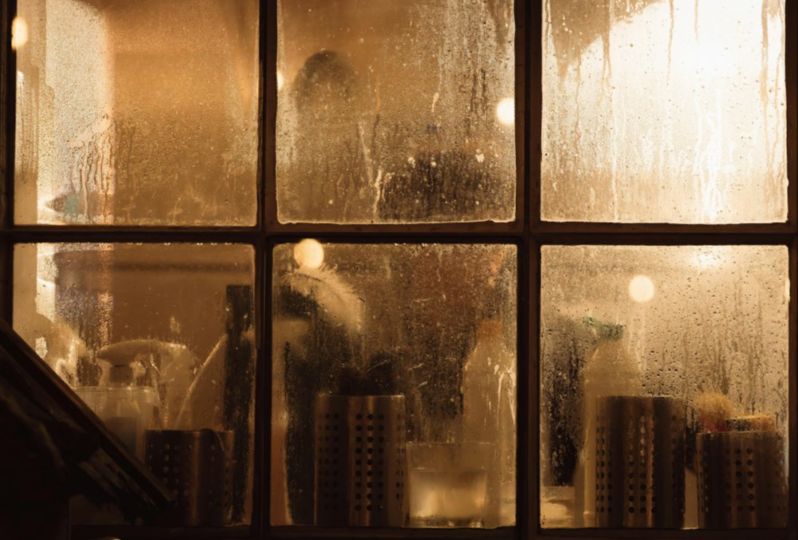
For most of human history, “fresh air” was not a concept, it was a constant. Homes leaked, windows stayed open, and whatever was generated indoors drifted outward. That reality has quietly but profoundly changed. Over the past half-century, particularly since the widespread adoption of central heating, ventilation, and air conditioning (HVAC) systems in the 1960s and 1970s, American homes have become tightly sealed environments designed to conserve energy rather than exchange air. By 1980, more than half of U.S. households were air-conditioned, marking a cultural shift in how people live, cook, clean, and breathe indoors.
The Invisible Accumulation
Indoor air pollution is often framed as a secondary concern compared with outdoor smog or industrial emissions. Yet in modern homes, the opposite may be true. Airtight construction, while energy-efficient, limits natural ventilation. Air is recirculated rather than replaced. Pollutants linger, concentrate, and interact.
Among the most consequential are dust mites, mold spores, volatile organic compounds (VOCs), combustion byproducts, pet-derived particles, and human biological emissions. Each originates from ordinary aspects of daily life; together, they form a persistent and often underestimated exposure burden.
Dust mites, for instance, thrive in the warm, humid microclimates of bedding, carpets, and upholstered furniture. Their allergenic proteins are potent triggers of asthma and allergic disease. In homes where air exchange is minimal, humidity can remain elevated, creating ideal conditions for their proliferation. Without adequate ventilation or filtration, these allergens accumulate rather than dissipate.
Mold presents a more complex paradox. In older homes, particularly those with open windows and natural airflow, mold was often visible and widespread, yet less likely to cause chronic illness. Today, mold hidden behind walls or within HVAC systems can be far more consequential. In sealed environments, spores are not simply present; they are continuously recirculated. A localized moisture problem can become a whole-house exposure, with airborne spores reaching rooms far from their origin. Under these conditions, mold exposure has been linked not only to allergic rhinitis and asthma but also to more severe inflammatory responses.
Living Organisms as Airborne Sources
A less appreciated component of indoor air is biological material continuously shed by both pets and humans. Pet dander is widely recognized, but it represents only part of a broader category of organic particulate matter. Animals release not only skin flakes but also proteins from saliva and urine, which can dry, fragment, and become airborne. These particles are exceptionally small, capable of remaining suspended for prolonged periods and penetrating deep into the respiratory tract.
In tightly sealed homes, these particles behave differently than they would in naturally ventilated environments. Rather than dispersing outdoors, they accumulate in carpets, bedding, and ventilation systems, then re-enter the air with movement, airflow, or mechanical circulation. HVAC systems can distribute these biologically active particles throughout an entire home, effectively transforming localized exposures into whole-house exposure.
Humans themselves are also a constant source of indoor biological emissions. Skin cells, respiratory droplets, and microscopic residues from sweat and other bodily fluids contribute to what scientists increasingly describe as the “indoor microbiome.” While many of these particles are harmless, in enclosed environments they can interact with dust, microbes, and chemical pollutants, forming complex bioaerosols. These mixtures may influence immune responses in ways that are only beginning to be understood.
In this context, indoor air is not simply a passive medium but a dynamic ecosystem, one shaped by its occupants.
Chemistry of the Modern Home
The chemistry of indoor air has also evolved. VOCs, emitted by paints, cleaning agents, furniture, and building materials, are ubiquitous in modern interiors. These compounds can irritate airways, exacerbate asthma, and potentially disrupt immune function. In a ventilated environment, their concentrations would fluctuate and decline. In a sealed home, they may persist at low but chronic levels, creating continuous exposure.
Similarly, pet and human derived particles can act as carriers for these chemicals, binding to other pollutants and prolonging their presence in indoor air. This convergence of biological and chemical exposures represents a distinctly modern phenomenon, one that reflects the interplay between building design and human activity.
When Air Doesn’t Move
The defining feature of modern indoor environments is not simply the presence of pollutants, but their persistence. HVAC systems, while essential for comfort, often recirculate indoor air with limited fresh-air exchange unless specifically designed to do otherwise. As a result, pollutants that would once have escaped are repeatedly inhaled.
This shift may help explain broader trends in respiratory and allergic disease. Asthma, allergic rhinitis, and other inflammatory conditions have risen over the same decades that homes have become more energy efficient and less ventilated. While many factors contribute, including urbanization, climate change, and environmental exposures, the indoor environment is an increasingly important piece of the puzzle.
Rethinking “Clean Air” Indoors
Addressing indoor air quality requires more than awareness, it requires adaptation. Mechanical ventilation systems that introduce outdoor air, high-efficiency particulate air (HEPA) filtration, and humidity control can significantly reduce pollutant levels. Simple behavioral changes, such as reducing indoor combustion sources or selecting low-emission materials, also matter.
But perhaps the most important shift is conceptual. The idea that indoor air is inherently safer than outdoor air no longer holds in all cases. In modern homes, what we generate indoors tends to stay indoors.
In a sense, we are living in a new atmospheric environment, one shaped not by geography or weather, but by architecture and technology. And like any environment, it carries risks when its dynamics are not fully understood.
Reference
1. Weschler CJ. Changes in indoor pollutants since the 1950s. Atmos Environ. 2009;43(1):153-169.doi:10.1016/j.atmosenv.2008.09.044
2. Klepeis NE, Nelson WC, Ott WR, et al. The National Human Activity Pattern Survey (NHAPS): a resource for assessing exposure to environmental pollutants. J Expo Anal Environ Epidemiol. 2001;11(3):231-252. doi:10.1038/sj.jea.7500165
3. Mendell MJ, Mirer AG, Cheung K, Tong M, Douwes J. Respiratory and allergic health effects of dampness, mold, and dampness-related agents: a review of the epidemiologic evidence. Environ Health Perspect. 2011;119(6):748-756. doi:10.1289/ehp.1002410
4. Arlian LG, Platts-Mills TA. The biology of dust mites and the remediation of mite allergens in allergic disease. J Allergy Clin Immunol. 2001;107(3 Suppl):S406-S413. doi:10.1067/mai.2001.113670
5. Fisk WJ, Lei-Gomez Q, Mendell MJ. Meta-analyses of the associations of respiratory health effects with dampness and mold in homes. Indoor Air. 2007;17(4):284-296. doi:10.1111/j.1600-0668.2007.00475.x