

A Fire That Won’t Go Out: How Chronic Inflammation Fuels Cancer
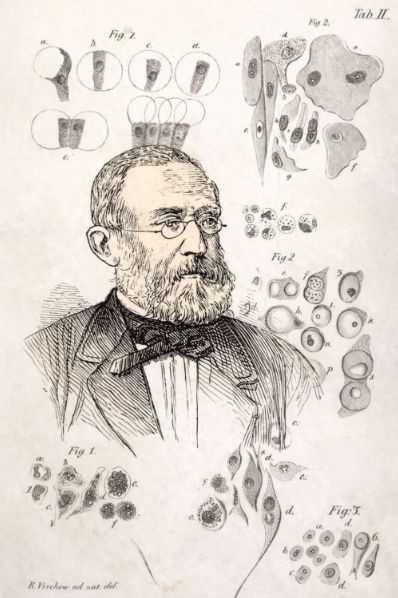
In the nineteenth century the German physician Rudolf Virchow noticed something unusual while examining cancer tissue under a microscope. Many tumors appeared surrounded by inflammatory cells. From this observation Virchow proposed a provocative idea: cancer often develops in places where tissues have been chronically irritated or inflamed.
When the Body’s Repair System Never Turns Off
Inflammation is one of the immune system’s most essential protective responses. When tissues are injured or invaded by microbes, immune cells rush to the site. They destroy pathogens, remove damaged cells and release chemical signals that stimulate tissue repair. New blood vessels form and surrounding cells divide to rebuild the damaged structure.
Under normal circumstances this process is temporary. Once healing is complete, inflammatory signals fade and the tissue returns to balance. But when inflammation becomes chronic, because of persistent infection, environmental exposure, autoimmune disease or long-term irritation, the repair system remains switched on. Immune cells continue to arrive, growth signals remain active and tissues undergo repeated cycles of injury and regeneration.
What begins as a protective response gradually transforms into something more dangerous. Instead of healing a wound once, the body behaves as if the injury never ended.
How Inflammation Damages DNA
The first step toward cancer usually involves mutations in DNA. Chronic inflammation can accelerate that process. Immune cells deploy highly reactive molecules, reactive oxygen and nitrogen species, to kill microbes. These molecules are extremely effective antimicrobial weapons, but they are also chemically aggressive. They can damage nearby human cells, breaking DNA strands or altering genetic code.
Over many years of persistent inflammation, these repeated chemical assaults increase the likelihood that mutations will strike genes controlling cell growth or repair. At the same time, inflammatory signals may weaken DNA repair pathways or interfere with mechanisms that normally eliminate damaged cells. The result is a dangerous combination: more genetic damage and fewer safeguards.
Molecular Switches That Link Inflammation and Cancer
Two molecular regulators sit at the center of the connection between inflammation and cancer: NF-κB and STAT3.These proteins act as transcription factors, molecular switches that control networks of genes. When tissues experience infection or injury, they activate programs that help cells survive stress, recruit immune cells and produce inflammatory signals.
In short bursts this response is beneficial. It allows tissues to survive damage long enough to repair themselves. But when these pathways remain chronically active, they create a biological environment that favors tumor growth. NF-κB and STAT3 promote cell survival, stimulate proliferation and sustain inflammatory signaling loops that keep tissues in a perpetual repair mode.
Many inflammation associated cancers, including cancers of the colon, liver, stomach and pancreas, show persistent activation of these pathways.
Tumors Build Their Own Ecosystem
Another major insight in cancer biology is that tumors are not simply clusters of malignant cells. They are complex biological ecosystems known as the tumor microenvironment. Inside many tumors, immune cells are abundant. Yet instead of attacking the malignancy, they often help sustain it.
Macrophages provide a striking example. Normally they engulf pathogens and clear damaged tissue. Within tumors they frequently become tumor-associated macrophages, releasing growth factors that stimulate cancer cells, enzymes that break down surrounding tissue and signals that encourage the formation of new blood vessels.
Other immune cells suppress anti-tumor defenses. Regulatory T cells and specialized myeloid cells release molecules that dampen the activity of cancer killing lymphocytes. In effect, tumors reshape the immune system around them, turning potential defenders into collaborators.
The Hidden Influence of Microbes
Clues From an Everyday Drug
One of the strongest hints linking inflammation and cancer came from a common medicine: aspirin. For decades, epidemiological studies have shown that people who regularly take aspirin or other nonsteroidal anti-inflammatory drugs have lower rates of colorectal cancer. In some studies, long-term use is associated with risk reductions approaching 40 to 50 percent.
These drugs suppress enzymes that generate inflammatory prostaglandins. By reducing inflammatory signaling, they may interrupt the biological environment that allows tumors to develop. The observation strengthened the idea that preventing cancer may sometimes involve controlling the chronic inflammatory states that allow tumors to begin.
A New Perspective on Cancer
Reference
1. Coussens LM, Werb Z. Inflammation and cancer. Nature. 2002;420(6917):860-867. doi:10.1038/nature01322
2. Karin M, Greten FR. NF-kappaB: linking inflammation and immunity to cancer development and progression. Nat Rev Immunol. 2005;5(10):749-759. doi:10.1038/nri1703
3. Elinav E, Nowarski R, Thaiss CA, Hu B, Jin C, Flavell RA. Inflammation-induced cancer: crosstalk between tumours, immune cells and microorganisms. Nat Rev Cancer. 2013;13(11):759-771. doi:10.1038/nrc3611
4. Balkwill F, Mantovani A. Inflammation and cancer: back to Virchow?. Lancet. 2001;357(9255):539-545. doi:10.1016/S0140-6736(00)04046-0
5. Hanahan D, Weinberg RA. Hallmarks of cancer: the next generation. Cell. 2011;144(5):646-674. doi:10.1016/j.cell.2011.02.013
6. Grivennikov SI, Greten FR, Karin M. Immunity, inflammation, and cancer. Cell. 2010;140(6):883-899. doi:10.1016/j.cell.2010.01.025
7. Mantovani A, Allavena P, Sica A, Balkwill F. Cancer-related inflammation. Nature. 2008;454(7203):436-444. doi:10.1038/nature07205