

Breathing the Concrete Jungle: The Hidden Impact of City Life
How Life in the World's Great Cities May Be Shaping Our Health
Every day, millions of people stream through the streets of the world's largest cities. Commuters emerge from the London Underground, pedestrians crowd the sidewalks of New York City, tourists fill the avenues of Paris, office workers hurry through Tokyo, and visitors wander among the ancient streets of Rome.
These cities are celebrated for their energy, culture, innovation and economic opportunity. Yet hidden beneath the movement of millions lies another reality, an atmospheric environment that every resident shares but few can see.
With every breath, urban dwellers inhale a complex mixture of vehicle emissions, tire particles, brake dust, industrial pollutants, construction dust, combustion byproducts and microscopic particulate matter. For scientists studying environmental health, modern cities have become one of the largest ongoing public health experiments in human history.
Increasingly, research suggests that the air surrounding us may influence not only the health of our lungs, but also the health of our hearts, brains, immune systems and overall longevity.
The Invisible Environment We Live In
Unlike contaminated water or spoiled food, air pollution rarely demands immediate attention. Most urban pollution is invisible. It has no obvious color, no dramatic warning label and often no immediate symptoms.
Yet city air is far from empty. Modern metropolitan atmospheres contain countless microscopic particles generated by traffic congestion, diesel engines, aviation, shipping, heating systems, construction activities and industrial processes. Many of these particles are so small that thousands could fit across the width of a human hair.
Residents of large cities spend years or even decades immersed in this environment. Because exposure occurs gradually, it is easy to overlook. The body, however, experiences every breath.
Why Pedestrians May Receive More Exposure Than They Realize
Many people assume that pollution exposure primarily affects drivers trapped in traffic. Surprisingly, pedestrians often experience some of the highest exposures. In crowded urban corridors, people walk directly alongside emission sources. Buses accelerate from stops, delivery trucks idle at curbs, taxis circulate through intersections and thousands of vehicles release fresh emissions throughout the day.
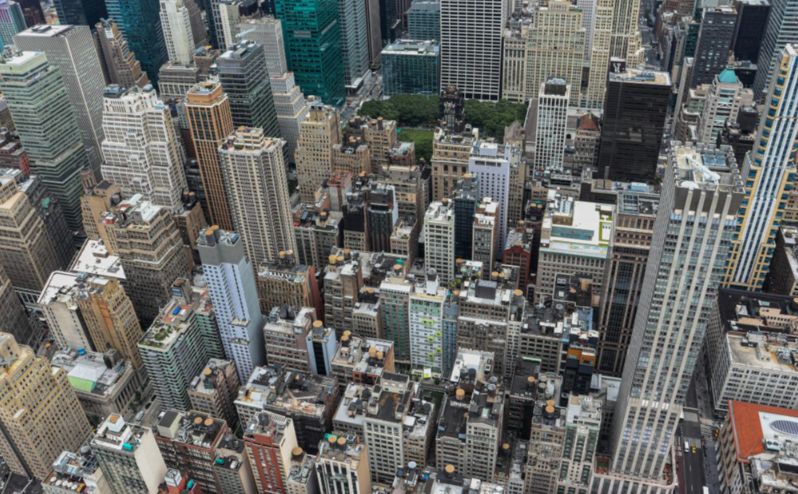
The design of many cities can amplify these effects. Tall buildings lining busy streets create what environmental scientists call an "urban canyon." Airflow becomes restricted, preventing pollutants from dispersing efficiently. Instead, microscopic particles accumulate near street level, precisely where people walk, exercise, shop and dine outdoors.
Whether along the Champs-Élysées, Times Square, Oxford Street, Shibuya Crossing or the crowded streets surrounding the Colosseum, pedestrians often occupy the exact layer of air where pollutants are most concentrated.
Ironically, people who spend the most time outdoors enjoying city life may sometimes receive the greatest cumulative exposures.
Tiny Particles, System-Wide Consequences
For much of the twentieth century, air pollution was considered primarily a respiratory problem. The concern centered on coughing, wheezing and chronic lung disease. Today, the scientific picture is far more complex.
Researchers have discovered that fine particulate matter, particularly particles known as PM2.5 and ultrafine particles, can penetrate deep into the lungs and trigger biological responses throughout the body.
After inhalation, these particles can stimulate immune cells, promote oxidative stress, disrupt blood vessel function and activate inflammatory pathways. Scientists increasingly view pollution not simply as a respiratory irritant but as a chronic inflammatory exposure.
This perspective helps explain why long-term air pollution exposure has been associated with a remarkably broad range of conditions, including asthma, heart disease, stroke, diabetes, cognitive decline, neurodegenerative disease, anxiety, depression and premature mortality.
In this emerging model, the lungs function as more than organs of oxygen exchange. They serve as a vast biological interface between the environment and the rest of the body. What enters the airways may ultimately influence organs far beyond them.
The Problem With Air That Looks Clean
One of the greatest challenges in addressing urban pollution is that harmful exposure often occurs even when the air appears perfectly normal.
Most people imagine pollution as dramatic smog thick enough to obscure skylines. Such events certainly occur, as demonstrated during major pollution episodes in cities around the world. Yet the larger public health burden may arise from lower levels of exposure experienced continuously over many years.
Scientists increasingly compare this process to other chronic health risks. Just as heart disease develops gradually through repeated exposures to unfavorable conditions, pollution-related injury may accumulate silently over decades.
The danger lies not only in rare environmental crises but in ordinary days that seem completely unremarkable.
The Future of Urban Health
Human civilization is becoming increasingly urban. For the first time in history, most people now live in cities, and that proportion continues to rise. This trend presents a profound challenge. The same metropolitan centers that drive innovation, culture and economic growth also concentrate pollution, traffic and environmental stressors.
The future of public health may therefore depend not only on advances in medicine, but also on how effectively cities manage the air their residents breathe. The great cities of the world, from New York City and London to Tokyo, Rome and Paris, have long been symbols of human achievement.
The next measure of their success may be something far less visible than their skylines. It may be whether the air surrounding millions of pedestrians each day helps sustain health, or quietly undermines it.
Reference
1. Brook RD, Rajagopalan S, Pope CA 3rd, et al. Particulate matter air pollution and cardiovascular disease: An update to the scientific statement from the American Heart Association. Circulation. 2010;121(21):2331-2378. doi:10.1161/CIR.0b013e3181dbece1
2. Burnett R, Chen H, Szyszkowicz M, et al. Global estimates of mortality associated with long-term exposure to outdoor fine particulate matter. Proc Natl Acad Sci U S A. 2018;115(38):9592-9597. doi:10.1073/pnas.1803222115
3. Lelieveld J, Evans JS, Fnais M, Giannadaki D, Pozzer A. The contribution of outdoor air pollution sources to premature mortality on a global scale. Nature. 2015;525(7569):367-371. doi:10.1038/nature15371
4. Kaur, S. & Nieuwenhuijsen, MJ & Colvile, RN. (2005). Pedestrian exposure to air pollution along a major road in Central London, UK. Atmospheric Environment. 39. 7307-7320. 10.1016/j.atmosenv.2005.09.008.
5. Schraufnagel DE, Balmes JR, Cowl CT, et al. Air Pollution and Noncommunicable Diseases: A Review by the Forum of International Respiratory Societies' Environmental Committee, Part 2: Air Pollution and Organ Systems. Chest. 2019;155(2):417-426. doi:10.1016/j.chest.2018.10.041