

From Vitruvian Man to Systems Medicine: When Biology Refuses to Fit the Box
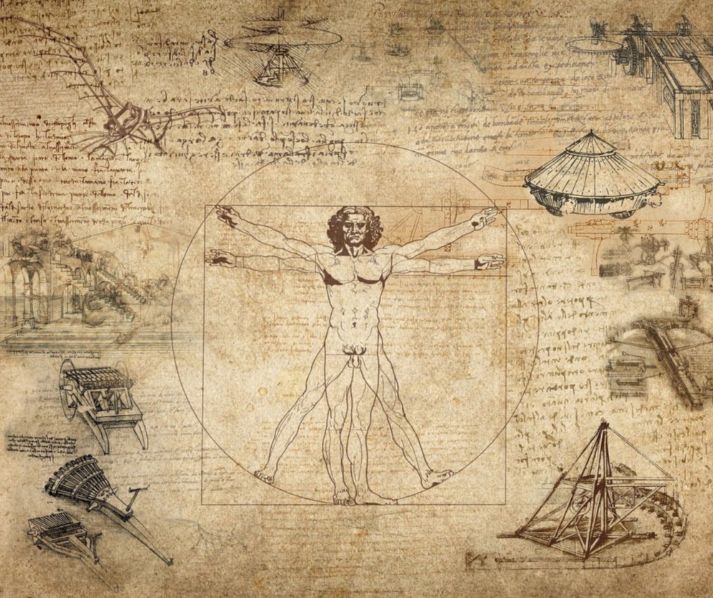
When Leonardo da Vinci drew the Vitruvian Man around 1490, he was not simply illustrating the human form. He was testing an idea inherited from the Roman architect Vitruvius: that the human body conforms to universal rules of proportion and symmetry. The experiment was visual, mathematical, and empirical.
Why Models Matter, and Why They Fail
Scientific progress depends on models. We draw boundaries, define variables, and establish thresholds in order to make complex systems intelligible. From metabolic pathways to diagnostic criteria, these conceptual “boxes” allow us to test hypotheses and compare outcomes.
But models carry an inherent risk: they can be mistaken for reality itself.
In living systems, variability is not noise, it is information. Biological states shift with time, context, and environment. When science treats deviation from a model as error rather than signal, critical dynamics are missed. The square looks orderly. The circle remains unseen. Leonardo’s drawing anticipated this tension. The geometry is precise, yet the body refuses to be fixed within it.
The Rise of Systems Thinking
For much of the twentieth century, biology advanced through reductionism, isolating genes, pathways, organs, and mechanisms. This approach yielded extraordinary breakthroughs, from antibiotics to molecular genetics. Yet it also fragmented our understanding of how living systems behave as integrated wholes.
Systems medicine represents a corrective turn. It emphasizes interactions over components, trajectories over snapshots, and networks over isolated parts. Health and disease are understood not as binary states, but as dynamic processes unfolding across time. This shift mirrors Leonardo’s approach. He did not study anatomy in isolation from mechanics, geometry, or environment. Knowledge emerged at intersections.
When the Center Moves
One of the most revealing aspects of the Vitruvian Man is its shifting center. The navel anchors the circle; the groin anchors the square. No single point governs all proportions. In modern terms, this is a reminder that biological systems rarely have a single controlling variable. Regulation is distributed. Feedback loops overlap. Causes and effects blur across scales. What appears stable at one level may be unstable at another.
Systems medicine embraces this complexity, not by abandoning measurement, but by expanding it.
A Renaissance Warning for Modern Science
The enduring power of the Vitruvian Man lies in what it refuses to simplify. It suggests that precision and humility must coexist. Measurement is essential, but so is the willingness to revise the frame when observations no longer fit.
As medicine and biology confront increasingly complex challenges, from chronic disease to aging and immune dysregulation, the lesson remains timely. If a biological system fits too neatly inside our models, we may not be measuring deeply enough. Leonardo left us with a visual reminder that progress does not come from forcing life into perfect shapes, but from understanding how, and why, it resists them.
Sometimes, when biology refuses to fit the box, it is offering its most important insight.
Reference
1. da Vinci L. The Notebooks of Leonardo da Vinci. Richter JP, ed. Oxford, UK: Oxford University Press; 1883.
2. Vitruvius Pollio M. De Architectura (Ten Books on Architecture). Morgan MH, trans. Cambridge, MA: Harvard University Press; 1914.
3. Kemp M. Leonardo da Vinci: The Marvellous Works of Nature and Man. Oxford, UK: Oxford University Press; 2006.
4. Kemp M, Wallace M. Spectacular Bodies: The Art and Science of the Human Body from Leonardo to Now. Berkeley, CA: University of California Press; 2000.
5. West GB. Scale: The Universal Laws of Life, Growth, and Death in Organisms, Cities, and Companies. New York, NY: Penguin Press; 2017.
6. Barabási AL. Network medicine--from obesity to the "diseasome". N Engl J Med. 2007;357(4):404-407. doi:10.1056/NEJMe078114
7. Greenhalgh T, Papoutsi C. Studying complexity in health services research: desperately seeking an overdue paradigm shift. BMC Med. 2018;16(1):95. Published 2018 Jun 20. doi:10.1186/s12916-018-1089-4