

How COVID-19 Can Leave Lasting Damage in the Lungs and Worsen Asthma
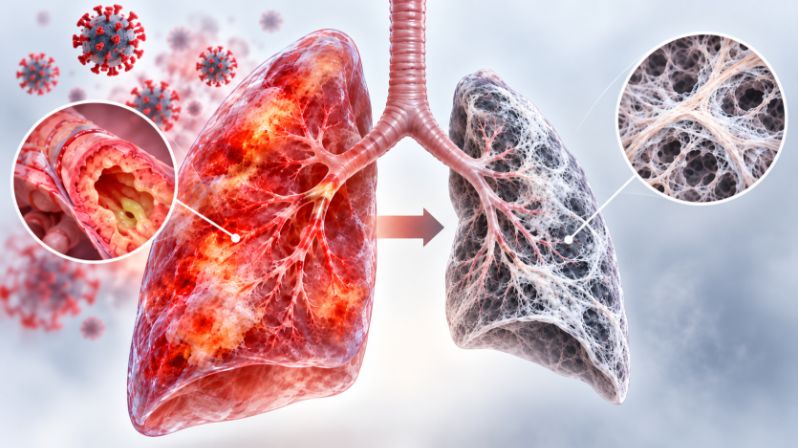
For some people, recovering from COVID-19 is only the beginning of a longer struggle with breathing problems. Research is revealing how lingering inflammation, lung scarring, and unstable asthma can complicate recovery, even months or years after the initial infection.
When the Lungs Cannot Fully Repair Themselves
Deep inside the lungs are millions of tiny air sacs called alveoli. Their thin, delicate walls allow oxygen to enter the bloodstream and carbon dioxide to escape with each breath. During severe COVID-19, inflammation can damage these structures, interfering with oxygen exchange and triggering the body's efforts to repair injured tissue.
Under normal circumstances, damaged cells are replaced and inflammation gradually subsides. But when injury is extensive, the repair process may become disorganized. Cells responsible for rebuilding tissue can begin producing excessive collagen, the structural protein that gives scar tissue its strength. As collagen accumulates, portions of the lungs may become thicker, stiffer, and less capable of expanding normally.
This process is known as pulmonary fibrosis. Unlike asthma, which primarily affects the airways, fibrosis involves the tissue surrounding the lungs' microscopic air sacs. Patients may experience persistent breathlessness, reduced exercise tolerance, and difficulty obtaining enough oxygen during physical activity.
However, not all lung abnormalities detected after COVID-19 represent permanent scarring. Some reflect inflammation or an abnormal but potentially reversible healing response. Others involve more established structural damage that may persist long after the original infection has resolved. Distinguishing between these processes remains one of the most important challenges in post-COVID-19 lung care.
How Often Does COVID-19 Leave Permanent Lung Damage?
Early research raised concerns about the frequency of lung scarring among COVID-19 survivors. Depending on the population studied and how abnormalities were defined, fibrotic-like changes were reported in approximately 20 to 70 percent of patients. The highest rates were generally observed among people who experienced severe pneumonia, required intensive care, or underwent mechanical ventilation.
Yet these figures require careful interpretation. Many early studies focused on hospitalized patients during the first waves of the pandemic, when severe lung injury was common. Moreover, changes that resemble fibrosis on a CT scan do not necessarily represent irreversible scar tissue. Some abnormalities gradually disappear as inflammation resolves and the lungs continue to heal.
Longer-term observations have offered a more nuanced picture. In a study published in the European Respiratory Journal in 2024, 728 previously hospitalized COVID-19 patients with lung abnormalities at discharge were followed for three years. The proportion with residual abnormalities declined from 46 percent at six months to 36 percent at three years. Nevertheless, impaired oxygen-transfer capacity remained detectable in 38 percent of patients at the three-year assessment.
The findings suggest that lung recovery can continue for years, but they also reveal that a substantial minority of severely affected patients may experience prolonged changes in respiratory function. Importantly, many post-COVID-19 abnormalities remain stable or improve over time rather than progressing relentlessly, as can occur in some other forms of pulmonary fibrosis.
Why Some People Develop Lung Scarring While Others Recover
Not everyone exposed to the same virus experiences the same degree of lung injury. Older adults, men, and patients with severe COVID-19 appear particularly vulnerable to persistent structural abnormalities. Prolonged hospitalization and mechanical ventilation are also associated with a greater likelihood of lasting lung changes, although these associations partly reflect the severity of the original illness.
At the microscopic level, much of the damage appears to involve an imbalance between inflammation and tissue repair. When the immune system responds to a serious infection, inflammatory molecules are released to help eliminate the virus and damaged cells. If this response becomes excessive or persists too long, it may interfere with the normal regeneration of lung tissue.
One important signaling molecule, transforming growth factor-beta, can stimulate cells that produce collagen. When these cells remain activated, tissue repair may shift toward scar formation rather than restoration of normal lung architecture.
Individual biology may also influence recovery. Researchers have identified associations between post-COVID-19 fibrotic changes and shorter telomeres, protective structures at the ends of chromosomes that are linked to cellular aging. Shorter telomeres may reflect a reduced ability of certain cells to regenerate after injury. This raises the possibility that COVID-19 can expose vulnerabilities that existed in the lungs long before infection.
For now, however, these biological findings cannot reliably predict which patients will develop permanent fibrosis, and routine testing for such markers is not established in clinical practice.
Asthma Reveals Another Form of Lasting Respiratory Injury
Lung scarring is only one possible explanation for persistent breathlessness after COVID-19. For people with asthma, the infection may leave the airways unusually inflamed and reactive, making symptoms more difficult to control long after the virus has disappeared.
Asthma affects the branching airways that conduct air into and out of the lungs. Inflammation causes these passages to swell, increases mucus production, and makes the surrounding muscles more likely to constrict. The result can be wheezing, coughing, chest tightness, and episodes of difficult breathing.
Respiratory viruses have long been recognized as important triggers of asthma exacerbations. But research suggests that COVID-19 may sometimes be followed by a more prolonged disruption of asthma control.
In a 2022 study published in Frontiers in Medicine, researchers at the University of São Paulo followed 208 adults with asthma, including 59 who developed laboratory-confirmed COVID-19. Among those infected, approximately 34 percent experienced persistent worsening of asthma, compared with about 11 percent of patients who had not contracted COVID-19 during the same observation period.
Perhaps most striking was the duration of this deterioration. Patients whose asthma worsened after COVID-19 required intensified controller medication for an average of approximately six months. Most had experienced relatively mild or moderate acute infections, and none required intensive care or mechanical ventilation.
The study was relatively small and involved patients at a specialized asthma center, limiting how broadly its findings can be applied. Nevertheless, it suggests that even COVID-19 infections that do not cause critical illness may be followed by prolonged airway instability in some people with asthma.
Why Does Asthma Stay Worse After the Virus Is Gone?
One possible explanation involves the delicate lining of the respiratory tract. Viral infections can injure airway epithelial cells, the protective layer that separates inhaled particles and microorganisms from the underlying tissues. When this barrier is disrupted, irritants and allergens may more readily activate local immune responses.
Inflammatory signals can also make the airways more sensitive, increasing their tendency to narrow in response to cold air, exercise, allergens, or environmental pollutants. In susceptible patients, these changes may persist even after the acute infection has resolved.
COVID-19 has also raised questions about the relationship between allergic inflammation and viral infection. Laboratory studies have shown that interleukin-13, a signaling protein associated with allergic asthma, can reduce expression of ACE2, a receptor used by SARS-CoV-2 to enter cells. This observation initially raised the possibility that some allergic inflammatory patterns might influence susceptibility to infection.
But the relationship is considerably more complicated. Reduced ACE2 expression does not guarantee protection from severe COVID-19, and asthma varies widely in its underlying inflammatory characteristics. A biological feature that influences viral entry may not prevent the subsequent inflammatory disturbances responsible for prolonged respiratory symptoms.
What remains uncertain is why some patients return quickly to their previous level of asthma control while others require months of additional treatment.
Can the Damage Be Reversed?
The possibility of recovery depends largely on what is causing the persistent breathing difficulty. If inflammation remains the dominant problem, treatment may help restore lung function. If substantial fibrosis has developed, reversing the structural damage becomes much more difficult.
High-resolution CT scans can help physicians identify patterns suggesting inflammation, organizing pneumonia, or more established fibrotic changes. Pulmonary function testing provides complementary information about airflow, lung volume, and how efficiently oxygen passes from the lungs into the bloodstream.
For selected patients with persistent inflammatory lung disease, corticosteroids may improve symptoms and imaging abnormalities. However, these medications are not appropriate for all patients and should not be prescribed solely because a CT scan remains abnormal after COVID-19.
Antifibrotic medications, including pirfenidone and nintedanib, have also attracted interest because they are used to treat certain progressive fibrotic lung diseases. Yet their role in post-COVID-19 fibrosis remains uncertain. In the randomized FIBRO-COVID trial published in 2025, pirfenidone did not produce a statistically significant improvement in the study's primary outcome compared with placebo.
These results reinforce the need to distinguish persistent inflammation from established scarring before selecting treatment. In patients with reduced exercise capacity, structured pulmonary rehabilitation may improve physical endurance and quality of life, even when some structural abnormalities remain.
For people with worsening asthma, treatment may involve reassessing inhaler technique, identifying ongoing environmental triggers, evaluating airway inflammation, and adjusting controller medications. The goal is not simply to suppress symptoms, but to understand why the airways remain unstable.
The Larger Question: What Does Recovery Really Mean?
COVID-19 has complicated the traditional distinction between acute infection and chronic respiratory disease. For some survivors, the virus disappears long before the lungs have finished recovering. In others, persistent breathing problems may reflect more than one process, including inflammation, fibrotic changes, airway dysfunction, cardiovascular complications, or physical deconditioning.
This complexity makes careful evaluation essential. Persistent breathlessness does not automatically indicate permanent lung scarring, just as a normal chest scan does not exclude uncontrolled asthma or other causes of respiratory symptoms.
The emerging evidence also offers reasons for cautious optimism. Many lung abnormalities continue to improve over time, and post-infectious asthma instability may respond to appropriate treatment. Yet a subset of patients experiences persistent impairment, particularly after severe COVID-19.
Perhaps the most important lesson is that recovery cannot always be measured by the disappearance of the virus. The lungs are living tissues that must repair themselves after injury, and that process can be remarkably slow. Understanding when healing has stalled, when inflammation remains active, and when lasting structural damage has developed may help clinicians identify which patients need additional treatment and which may continue to recover with time.
As the long-term consequences of COVID-19 become clearer, a central question remains: why do some lungs heal almost completely while others continue to bear the effects of an infection long after it has ended?
Answering that question may provide insights not only into COVID-19, but also into how respiratory infections can influence chronic lung disease more broadly.
Reference
1. Alrajhi NN. Post-COVID-19 pulmonary fibrosis: an ongoing concern. Ann Thorac Med. 2023;18(4):173-181. doi:10.4103/atm.atm_7_23
2. Yoon HY, Uh ST. Post-coronavirus disease 2019 pulmonary fibrosis: wait or needs intervention. Tuberc Respir Dis (Seoul). 2022;85(4):320-331. doi:10.4046/trd.2022.0053
3. Agondi RC, Menechino N, Marinho AKBB, Kalil J, Giavina-Bianchi P. Worsening of asthma control after COVID-19. Front Med (Lausanne). 2022;9:882665. doi:10.3389/fmed.2022.882665
4. Han X, Chen L, Guo L, et al. Long-term radiological and pulmonary function abnormalities at 3 years after COVID-19 hospitalisation: a longitudinal cohort study. Eur Respir J. 2024;64(1):2301612. doi:10.1183/13993003.01612-2023
5. Bermudo-Peloche G, Del Rio B, Vicens-Zygmunt V, et al. Pirfenidone in post-COVID-19 pulmonary fibrosis (FIBRO-COVID): a phase 2 randomised clinical trial. Eur Respir J. 2025;65(4):2402249. doi:10.1183/13993003.02249-2024