

The Hidden Air of the Subway: What Paris Metro Dust May Be Doing to the Lungs
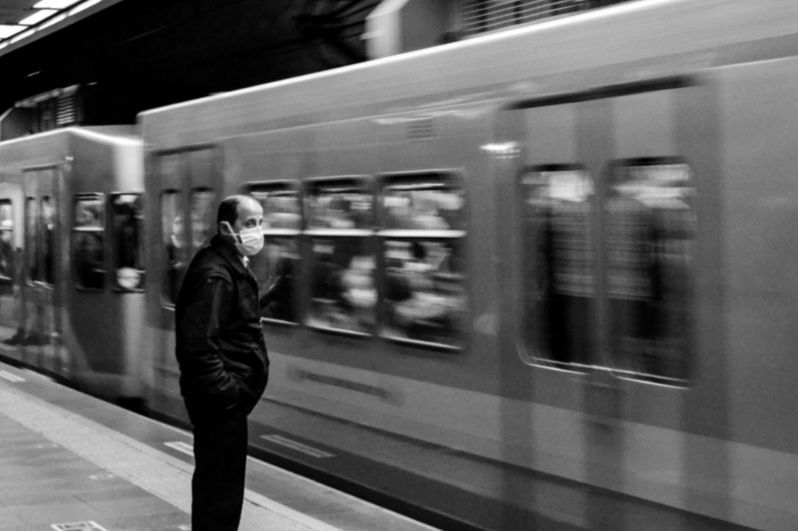
Every morning in Paris, millions of people descend into the subway. The experience feels almost geological: warm gusts of air, metallic screeches echoing through tunnels, the smell of brakes and electricity lingering underground. For commuters, these sensations are mostly background noise, a familiar texture of urban life.
A Metallic Atmosphere
Air pollution research has traditionally focused on smoke stacks and tailpipes. Subway pollution operates by different physics. Instead of fuel combustion, underground systems produce particles through abrasion and heat. Each time a train brakes or rounds a curve, tiny fragments of metal are shaved away and aerosolized into the air. Some particles are relatively large. Others are ultrafine, thousands of times thinner than a human hair.
These ultrafine particles are particularly important because they behave less like dust and more like gases. They can drift deep into the lungs, crossing into delicate regions where oxygen enters the bloodstream.The Paris researchers studied workers on Line 7, one of the city’s less ventilated subway lines. They monitored station agents, train operators and security guards, measuring the particles in the surrounding air as well as biological samples collected from the workers themselves. The results revealed a surprisingly stratified underground ecology.
Train operators experienced the highest concentrations of larger particulate matter such as PM10 and PM2.5. Station agents, meanwhile, encountered the greatest numbers of ultrafine particles. Even within the same subway system, the body may therefore experience entirely different forms of exposure depending on where a person spends the day.
The Lungs as Environmental Sensors
Perhaps the most intriguing aspect of the study was not what scientists found in the air but what they found in the breath. The researchers used a technique called exhaled breath condensate, or EBC. Workers breathed into a cooled collection device that condensed microscopic droplets from the respiratory tract. The resulting fluid acts almost like a biochemical fingerprint of the lungs themselves. This allowed scientists to ask an unusually intimate question: not merely what people were breathing, but what was actually reaching the respiratory system.
They discovered that higher ultrafine particle concentrations in subway air correlated with higher particle concentrations in exhaled breath samples. In other words, the particles were not simply suspended in the environment. They were entering the body. That distinction matters.
Environmental exposure is often measured indirectly, through ambient air monitors or workplace sampling. But biology does not always obey environmental averages. Two people standing in the same station may absorb particles differently depending on breathing patterns, airway anatomy, inflammation or underlying disease. The lungs, in effect, become personalized environmental sensors.
The Iron Signature
One metal dominated the underground atmosphere: iron.
Subway dust has long been known to contain unusually high levels of iron generated from rails, wheels and braking systems. In this study, iron-rich particles represented a major component of the underground aerosol. Iron is essential to human life. Hemoglobin depends on it to carry oxygen. Yet free iron particles inside tissues can also become chemically dangerous. Iron readily participates in reactions that generate reactive oxygen species, highly unstable molecules capable of damaging proteins, membranes and DNA.
This process, known as oxidative stress, has become one of the central theories linking pollution exposure to chronic disease.Researchers increasingly suspect that repeated oxidative stress in the airways may contribute to asthma, cardiovascular disease and systemic inflammation. Some studies even suggest that ultrafine particles may influence the nervous system and vascular function far beyond the lungs.
The Paris study also highlighted a subtler biological possibility. Iron-rich particles may interfere with the body’s regulation of zinc and copper, two metals involved in antioxidant defense systems. That raises the possibility that subway particles do not merely irritate the lungs mechanically. They may also disrupt the body’s biochemical balance.
The Mystery of the Missing Metals
Curiously, some of the metals most abundant in subway air, particularly iron and aluminum, were difficult to detect in breath and urine samples. At first glance, this might appear reassuring. But the explanation may be more complicated.
Researchers suspect that the body may rapidly sequester these particles inside tissues or immune cells instead of clearing them efficiently into urine. If true, low urinary levels would not necessarily indicate low biological impact. The phenomenon reflects a recurring challenge in environmental medicine: absence of evidence in one biological compartment does not always mean absence of exposure.
Human physiology is not simply a passive filter. It actively captures, redistributes and compartmentalizes foreign material in ways scientists are still struggling to map.
Underground Exposure in a Warming World
The implications extend well beyond Paris.
Subway systems in London, New York City and Seoul have reported similarly elevated underground particle levels. At the same time, cities around the world are encouraging mass transit as a cornerstone of climate strategy. Electrified rail systems reduce surface traffic and greenhouse gas emissions. Yet the underground environment may carry its own underappreciated environmental exposures.
This does not mean subways are inherently dangerous. The Paris exposures remained below French occupational safety limits. But modern environmental science is increasingly questioning whether traditional safety thresholds fully capture the effects of chronic low-level inflammation accumulated over decades.
Historically, occupational limits were designed to prevent obvious industrial diseases, lung fibrosis, poisoning, overt toxicity. Today researchers are more interested in quieter biological effects: oxidative stress, endothelial dysfunction, chronic airway irritation and subtle cardiovascular strain. Those effects may unfold slowly enough to remain invisible for years.
A New Era of Biomonitoring
One of the study’s most important contributions may ultimately be methodological rather than toxicological.
Exhaled breath condensate offers a rare combination in environmental health research: it is noninvasive, rapid and directly connected to the organ of exposure. Scientists envision a future in which workers in polluted environments could undergo routine respiratory biomonitoring much like blood pressure screening today.
Instead of waiting for disease to appear, physicians might one day detect biochemical stress signals in the lungs long before symptoms develop.
The subway, in this sense, becomes more than a transportation system. It becomes a living laboratory for understanding how modern urban environments interact with human biology. And beneath the familiar rhythm of trains and tunnels, an invisible experiment in particle exposure continues with every passing commute.
Reference
1. Guseva Canu I, Crézé C, Hemmendinger M, et al. Particle and metal exposure in Parisian subway: Relationship between exposure biomarkers in air, exhaled breath condensate, and urine. Int J Hyg Environ Health. 2021;237:113837. doi:10.1016/j.ijheh.2021.113837
2. Loxham M, Cooper MJ, Gerlofs-Nijland ME, et al. Physicochemical characterization of airborne particulate matter at a mainline underground railway station. Environ Sci Technol. 2013;47(8):3614-3622. doi:10.1021/es304481m
3. Pang L, Yang C, Cao X, Tian Q, Li B. Experimental Investigation of Air Quality in a Subway Station with Fully Enclosed Platform Screen Doors. Int J Environ Res Public Health. 2020;17(14):5213. Published 2020 Jul 19. doi:10.3390/ijerph17145213
4. Kelly, Frank & Fussell, Julia. (2012). Size, source and chemical composition as determinants of toxicity attributable to ambient particulate matter. Atmospheric Environment. 60. 504–526. 10.1016/j.atmosenv.2012.06.039.
5. World Health Organization. WHO Global Air Quality Guidelines: Particulate Matter (PM2.5 and PM10), Ozone, Nitrogen Dioxide, Sulfur Dioxide and Carbon Monoxide. Geneva: World Health Organization; 2021.