

Skip to content

The Strength to Withstand the Cure: Lunar New Year Reflections on Eastern Heritage and Modern Medicine
By Doanh Nguyen, MD FAAAAI, 02/16/2026

The Strength to Withstand the Cure: Lunar New Year Reflections on Eastern Heritage and Modern Medicine

The Logic of Strength Before Poison: What Kung Fu Masters Understood Long Before Modern Medicine. Lessons from airway inflammation, chemotherapy and the logic of resilience

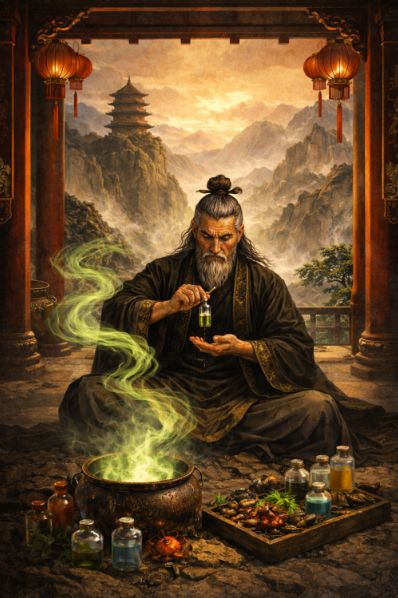
In classic Chinese wuxia stories, the most feared fighters are often not those who avoid poison, but those who survive it. These characters cultivate what is sometimes called a “Poison Body.” Through careful, gradual exposure, they transform themselves into beings resistant to toxins that would kill ordinary people. But there is always a condition: only masters with deep internal strength attempt such training. Those who are weak do not become stronger. They die.

It may sound like fantasy. But modern medicine operates on precisely the same principle. Whether treating allergies, cancer or even performing surgery, physicians must answer the same fundamental question before beginning: 

Is the patient strong enough to survive the treatment?

The Hidden Conversation Doctors Have Before Every Major Treatment

In oncology, this question has a formal name: performance status. Before chemotherapy begins, doctors assess how well a patient can function, whether they can walk, work, eat and carry out daily activities. This evaluation helps predict whether the body can tolerate chemotherapy, which is, in essence, a controlled toxin designed to kill cancer cells.

If performance status is too low, chemotherapy may do more harm than good. The body cannot recover fast enough from the stress. But if performance status is high, the same drugs that could destroy a fragile patient may save a stronger one. The difference is not the poison. The difference is the patient’s physiologic reserve. Surgeons follow the same logic. Major surgery places enormous stress on the body, blood loss, inflammation, metabolic demand. Patients must have enough reserve to survive the operation and heal afterward. This is why surgeons carefully evaluate fitness before operating. In some cases, they delay surgery so patients can regain strength first.

This preparation is not optional. It is survival.

Allergy Treatment Uses the Same Strategy, Introducing the Enemy Slowly

Allergy immunotherapy, commonly known as allergy shots, works in a way that might seem counterintuitive. Doctors treat allergic patients by injecting them with the very substances that trigger their symptoms. Over time, the immune system learns to tolerate what it once feared. But allergists do not begin this process when asthma is unstable or breathing is compromised. They wait. They stabilize airway inflammation first. Because introducing allergens to an already inflamed airway can provoke severe reactions. Once stability is restored, the same exposure becomes therapeutic. Again, the outcome depends not on the allergen, but on the condition of the airway receiving it.

The Airway as an Interface of Environmental Exposure and Systemic Response

Every day, the average person inhales more than 10,000 liters of air. Along with oxygen come pollen, dust, pollution and microbes. The lungs must constantly decide what to tolerate and what to fight. When the airway is healthy and stable, most of these exposures pass without consequence. But when the airway is inflamed, even ordinary exposures can trigger widespread effects, not just coughing or wheezing, but fatigue, rapid heart rate, poor sleep and mental fog.

This happens because the lungs are not isolated organs. They are deeply connected to the nervous system, immune system and cardiovascular system. When breathing becomes harder, even subtly, the entire body senses stress. Heart rate rises. Stress hormones increase. Energy shifts toward survival. Many people never realize their symptoms may begin in the airway, because standard breathing tests can still appear normal in early inflammation. Yet the body feels the strain.

Strength Determines Whether Exposure Harms or Heals


Across medicine, the pattern repeats. Chemotherapy can cure or harm depending on performance status. Surgery can restore health or overwhelm the weak. Allergy immunotherapy can build tolerance or trigger reactions depending on airway stability. Exposure alone does not determine the outcome. Resilience does.


This idea echoes something ancient Eastern traditions understood intuitively: health is not simply about avoiding challenges. It is about cultivating the strength to withstand them. The fictional poison masters were not powerful because poison made them strong. They were powerful because they became strong enough to survive poison.


Why This Matters Today


Modern life exposes people to constant environmental stress, air pollution, allergens, infections and psychological strain. Medicine often focuses on eliminating these exposures. But equally important is strengthening the body’s ability to tolerate them. For people with airway inflammation, restoring lung stability may improve not only breathing but also energy, sleep and overall well being. For cancer patients, improving performance status can determine whether life saving treatment is possible. For surgical patients, building strength beforehand can mean the difference between recovery and complications. In each case, the body must be ready.


An Old Lesson, Rediscovered


Centuries ago, storytellers used martial arts legends to explore the limits of human endurance. Today, physicians use clinical scales, laboratory tests and imaging. But both are describing the same biological truth:


The treatments that heal us often place stress on the body.


Whether that stress destroys or transforms depends on the strength that exists beforehand. As medicine advances, this ancient insight remains as relevant as ever. The goal is not simply to fight disease. It is to cultivate resilience, so the body can survive the fight.


As families gather to celebrate the Lunar New Year, this shared wisdom offers an important reminder. Before confronting illness, strengthen the body. Before introducing stress, restore stability. Before expecting recovery, cultivate resilience. In this way, the Lunar New Year is not just a cultural celebration. It is a reflection of one of medicine’s most enduring truths: The treatments that heal us require strength, and building that strength is the first step toward recovery.


Reference

1. Liu Y. Healing with Poisons: Potent Medicines in Medieval China. Seattle, WA: University of Washington Press; 2021. doi:10.6069/9780295749013.

2. Cox L, Nelson H, Lockey R, et al. Allergen immunotherapy: a practice parameter third update. J Allergy Clin Immunol. 2011;127(1 Suppl):S1-S55. doi:10.1016/j.jaci.2010.09.034

3. Oken MM, Creech RH, Tormey DC, et al. Toxicity and response criteria of the Eastern Cooperative Oncology Group. Am J Clin Oncol. 1982;5(6):649-655.

4. Makary MA, Segev DL, Pronovost PJ, et al. Frailty as a predictor of surgical outcomes in older patients. J Am Coll Surg. 2010;210(6):901-908. doi:10.1016/j.jamcollsurg.2010.01.028

5. Hammad H, Lambrecht BN. Barrier Epithelial Cells and the Control of Type 2 Immunity. Immunity. 2015;43(1):29-40. doi:10.1016/j.immuni.2015.07.007

6. Tattersall MC, Guo M, Korcarz CE, et al. Asthma predicts cardiovascular disease events: the multi-ethnic study of atherosclerosis. Arterioscler Thromb Vasc Biol. 2015;35(6):1520-1525. doi:10.1161/ATVBAHA.115.305452