

Rise of Climate-Driven Fungal Diseases
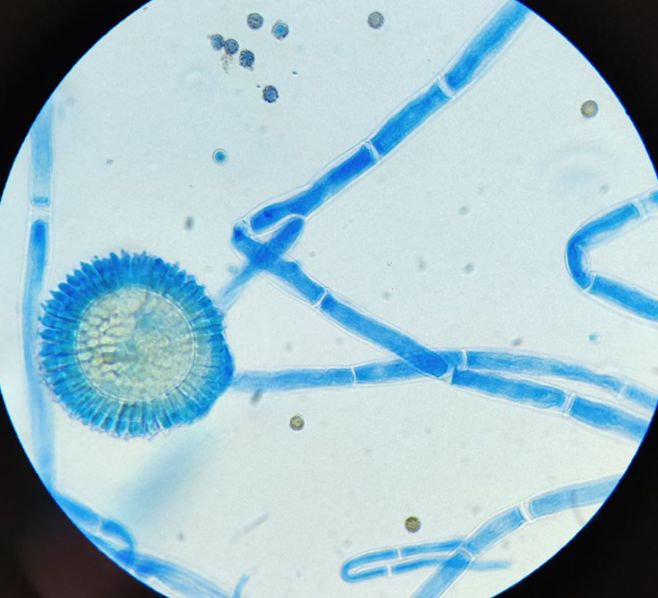
There is an old joke among infectious disease specialists that fungi are "the forgotten kingdom." They lack the explosive headlines of viruses, the notoriety of antibiotic-resistant bacteria, and the global attention commanded by pandemics. Yet fungi kill well over a million people each year worldwide, devastate crops and wildlife, and quietly shape the ecosystems around us.
The Planet Is Becoming More Hospitable to Fungi
When most people hear "fungus," they picture mushrooms sprouting after rain or mold creeping across forgotten leftovers. But the fungal kingdom is vast, encompassing millions of species that inhabit nearly every corner of the Earth. Most are harmless, or even beneficial. Only a tiny fraction can infect humans. For generations, geography helped keep many of those pathogens in check.
Certain fungi evolved to thrive only under specific combinations of temperature, rainfall, soil composition, and vegetation. Physicians learned to associate diseases with particular regions. Valley fever belonged to the deserts of the American Southwest. Other fungal infections occupied their own ecological niches, often so predictably that a patient's travel history could point toward the diagnosis.
Climate change is disrupting that map. Increasingly, seasons no longer follow familiar patterns. Many regions swing rapidly between periods of intense rainfall and prolonged drought. To fungi, those extremes can be remarkably advantageous. Rain allows fungal colonies hidden within the soil to expand. When the landscape later dries, those underground networks fragment into microscopic spores that become airborne. Winds then carry them across fields, neighborhoods, and cities, where unsuspecting people inhale them without ever noticing.
The process resembles nature loading millions of invisible seeds into the atmosphere. Researchers have linked this wet-then-dry cycle to the growing incidence of Valley fever, a lung infection caused by Coccidioides fungi. As droughts intensify across the western United States, public health officials expect the geographic range of the disease to continue expanding.
Meanwhile, other climate extremes create different opportunities. Floodwaters leave behind water-damaged buildings where molds flourish. Expanding deserts generate dust storms capable of transporting fungal spores across enormous distances. The result is a world in which environmental fungi encounter humans more often, and in more places, than ever before.
Our Bodies Have Always Had a Secret Defense
One reason fungal infections have remained relatively uncommon in healthy people has little to do with our immune systems. It is our warmth.
Most environmental fungi prefer cooler temperatures than those found inside mammals. The average human body maintains a temperature of about 98.6 degrees Fahrenheit, creating what scientists sometimes call a thermal barrier. For millions of years, this barrier has excluded the overwhelming majority of fungal species simply because they cannot tolerate the heat.
It is one of evolution's quiet successes. But evolution does not stand still. As global temperatures rise, fungi that survive warmer environments gain an advantage over their competitors. Over countless generations, natural selection may gradually favor strains capable of tolerating temperatures increasingly similar to those inside the human body.
Laboratory experiments already hint that this process may be underway. Researchers have shown that prolonged heat stress can induce genetic changes in fungi such as Cryptococcus deneoformans, changes that may improve survival under stressful conditions and, in some cases, contribute to resistance against antifungal drugs.
Scientists emphasize that climate change is not magically creating dangerous new fungi. Rather, it may be selecting for organisms already better equipped to survive inside warm-blooded hosts. The distinction matters, but so does the implication. The temperature that has quietly protected mammals for millions of years may no longer be as formidable as it once was.
The Diseases We Think Are "Regional" May Not Stay That Way
Medical geography has always depended on stable climates. Doctors in Arizona routinely consider Valley fever when evaluating stubborn pneumonias. Physicians in the Northeast generally do not. But what happens when the fungus moves north?
Climate models suggest that several important fungal pathogens could expand across large portions of North America during this century. Communities that have never considered fungal disease may begin seeing patients with persistent cough, fever, and fatigue whose illness refuses to improve despite repeated antibiotic treatment.
This is one reason fungal infections are notoriously difficult to diagnose. Many look almost identical to bacterial pneumonia. Others mimic tuberculosis, lung cancer, or chronic inflammatory diseases. Patients may spend weeks, or months, searching for answers while receiving treatments that do little to address the underlying infection.
The challenge is not only scientific. It is educational. As fungi migrate into unfamiliar regions, physicians must learn to recognize diseases they were never trained to expect.
We May Be Looking Through a Keyhole
One of the most surprising conclusions of the review is how little we actually know. Public health surveillance for fungal diseases remains fragmented across much of the world. Even in the United States, reporting requirements vary dramatically from state to state. Some fungal infections are carefully tracked in certain regions while remaining largely invisible elsewhere.
The situation is even more difficult in many low- and middle-income countries, where specialized fungal diagnostic tests are often unavailable. The result is a classic public health paradox.
Diseases that are poorly measured often receive less attention, fewer research dollars, and slower investment in prevention, making them even harder to understand. Scientists increasingly suspect that the burden of fungal disease has been underestimated for decades.
Listening to the Environment
The COVID-19 pandemic demonstrated that wastewater can reveal outbreaks before hospitals fill with patients. Researchers are now applying the same strategy to fungi. Hospital sewer systems have already yielded evidence of Candida auris, an emerging multidrug-resistant fungus that has become a major concern in healthcare settings. Air-monitoring networks are tracking fungal spores carried through the atmosphere. Citizen scientists are collecting soil samples to identify resistant fungal strains before they spread widely.
Some of the most valuable surveillance may come from unexpected partners.
Animals often encounter environmental fungi before humans do. Dogs digging in contaminated soil, birds traveling long migratory routes, or wildlife living in forests can provide early clues that dangerous fungi have established themselves in a new ecosystem. In several instances, veterinary cases have preceded recognized human outbreaks. Nature often whispers before it shouts.
The Price of Winning the War Against Crop Diseases
Climate is only one force shaping fungal evolution. Modern agriculture depends heavily on fungicides to protect crops from devastating plant diseases. Many belong to the same chemical families physicians rely on to treat life-threatening fungal infections in hospitals.
That overlap has consequences. Environmental fungi exposed repeatedly to agricultural fungicides can evolve resistance long before they ever infect humans. When those resistant organisms eventually cause disease, physicians may discover that their most reliable medications have already lost much of their effectiveness.
The mold Aspergillus fumigatus illustrates this growing problem. Resistant strains have appeared with increasing frequency worldwide, raising concern that agricultural practices may inadvertently be selecting for fungi capable of evading clinical treatment.
Some experts now argue that medicine and agriculture should develop separate classes of antifungal drugs, much as society has begun reconsidering antibiotic use in livestock.
The Vaccine Gap
Modern medicine has vaccines against viruses that once paralyzed children and bacteria that once killed millions. Against fungi, we have none.
Not a single vaccine has yet been licensed for human fungal disease. Several promising candidates are advancing through research, including vaccines targeting Candida and Valley fever, but fungal biology is extraordinarily complex. Developing safe and effective vaccines has proven far more difficult than for many viral infections.
If climate change continues expanding fungal diseases, that gap may become increasingly difficult to ignore.
Learning to Forecast Invisible Storms
Perhaps the most hopeful message emerging from fungal research is that many outbreaks may be predictable. Meteorologists routinely forecast hurricanes days before landfall. Air-quality experts predict smoke events. Allergy specialists anticipate pollen seasons.
Researchers envision a future in which climate models similarly forecast periods of heightened fungal risk. Early warning systems could alert clinicians when environmental conditions favor spore dispersal, allowing vulnerable patients to take precautions and physicians to recognize infections earlier. California has already begun moving in this direction through legislation promoting Valley fever awareness and screening in high-risk regions.
The technology exists. The challenge is building the surveillance systems before the need becomes overwhelming.
A Different Way of Thinking About Climate Change
When people discuss climate change and health, they usually think about heat stroke, hurricanes, wildfire smoke, or mosquitoes carrying tropical diseases into new regions.
Fungi rarely enter the conversation. Yet they are among the oldest organisms on Earth, exquisitely sensitive to changes in temperature and moisture. Every shift in rainfall, every prolonged drought, every warming season subtly reshapes the invisible fungal world surrounding us.
Most of these changes will never make headlines. But together they reveal something profound: climate change is not only altering the planet we live on. It is changing the microbial ecosystems that have quietly governed human health for millennia.
The fungi are not invading a new world. They are simply adapting to one that we have already begun to transform.
Reference
1. Head, J.R., Heaney, A.K. Emergence of human pathogenic fungi in a changing climate. Nat Rev Microbiol (2026). www.doi.org/10.1038/s41579-026-01345-4
2. Garcia-Solache MA, Casadevall A. Global warming will bring new fungal diseases for mammals. mBio. 2010;1(1):e00061-10. Published 2010 May 18. doi:10.1128/mBio.00061-10
3. Fisher MC, Gurr SJ, Cuomo CA, et al. Threats Posed by the Fungal Kingdom to Humans, Wildlife, and Agriculture. mBio. 2020;11(3):e00449-20. Published 2020 May 5. doi:10.1128/mBio.00449-20
4. Gorris ME, Treseder KK, Zender CS, Randerson JT. Expansion of Coccidioidomycosis Endemic Regions in the United States in Response to Climate Change. Geohealth. 2019;3(10):308-327. Published 2019 Oct 10. doi:10.1029/2019GH000209
5. World Health Organization. WHO fungal priority pathogens list to guide research, development and public health action. Geneva: World Health Organization; 2022.